Practical Luanda
Feeding a Site Crew in Luanda: Meals Around the Working Day
How to keep a working team fed across early departures, long shifts and late returns - residence kitchens, packed meals on site and the food-safety basics for Angola.
A crew that leaves the residence before the morning traffic and comes back after the evening peak does not eat on a normal timetable. Meals have to follow the shift: an early breakfast, a lunch that arrives at the site because nobody can leave it, and a hot dinner waiting whatever time the cars return. This guide sets out how Fortaleza's coordinators plan food for the teams they house and feed, and what a project manager should settle before the first rotation lands.
Build the meal plan around the shift, not the clock
Start with the site timetable. If the shuttle leaves at half past five, breakfast has to be ready before it; if the shift ends at six, dinner has to hold until the cars are back. Fortaleza's residence kitchens serve breakfast from early morning and keep dinner service running into the evening, and the coordinator adjusts to a crew's actual rota once it is known. For a rotating crew the useful step is a written weekly plan - which meals are taken at the residence, which are delivered to site, and what happens on the changeover day when two teams overlap.
Lunch goes to the crew, not the crew to lunch
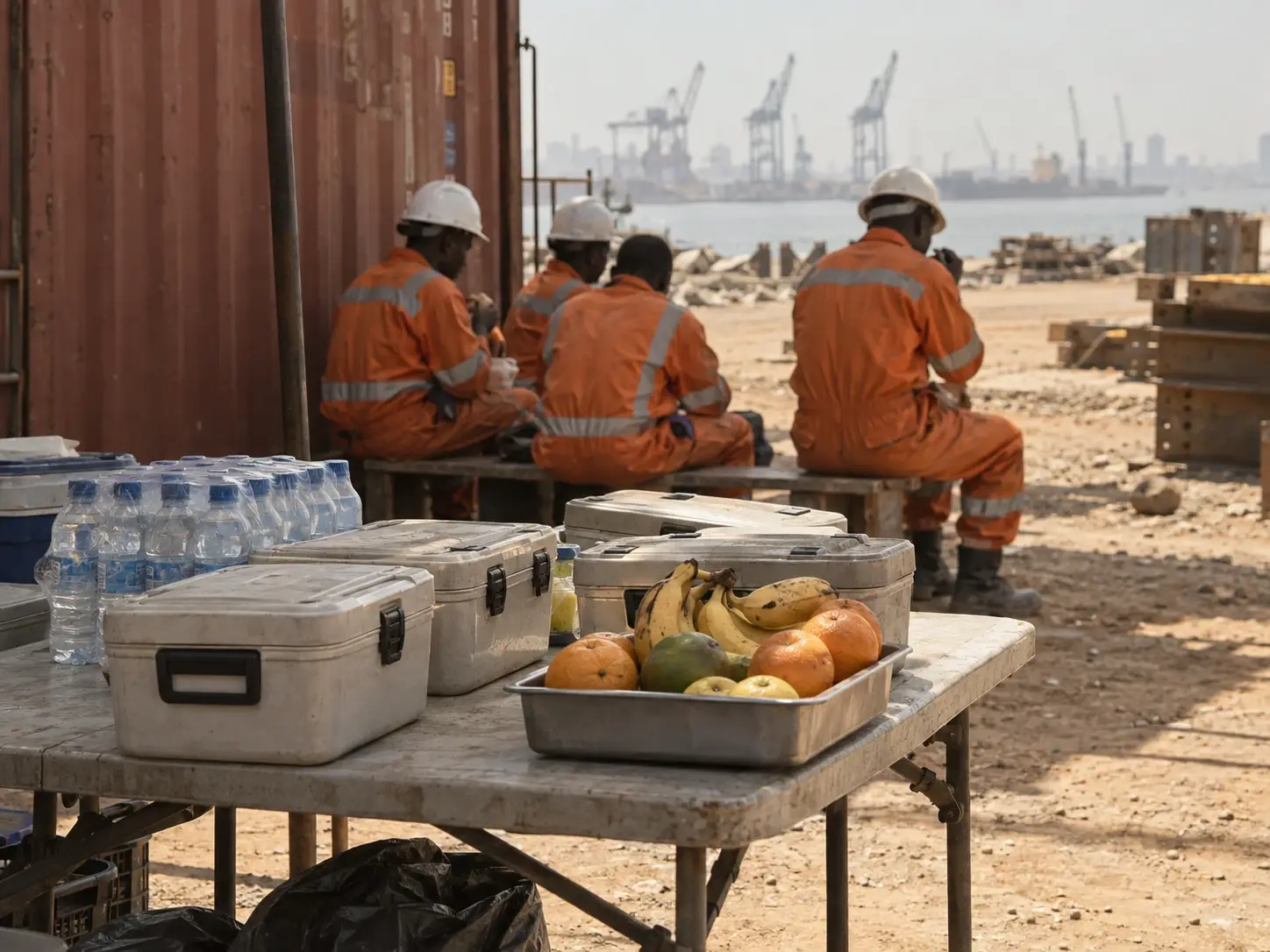
Leaving an industrial site, the port or SONILS for lunch costs an hour of traffic and a second pass through the gate, so the practical answer is a meal that arrives at the site. Fortaleza's kitchens pack meals per head - a snack pack for a short shift or a hot meal box with a main course, bread, fruit and water for a full day - and deliver them to the site, the base or the vessel agent. Order by headcount the day before, name one person on site to receive and hand out the boxes, and agree a delivery window that works with the gate. Menus and quotes are available on request through the Catering page.
Food safety in a hot climate
Luanda is hot and humid for most of the year, and a meal that sits in a vehicle or an unshaded cabin for three hours is a risk, not a lunch. Keep the chain short: meals packed the same morning, transported in closed boxes, handed out on arrival and eaten within the window the kitchen recommends. Anything left over is discarded, not kept for the evening. On site, hand-washing or sanitiser before eating matters more than anywhere else, and bottled water should be the only water the crew drinks. Follow current official health advice on food and water for Angola and brief every new arrival on it.
Dietary needs, rotation crews and the one local meal
Collect dietary requirements with the crew list - allergies, halal, vegetarian, medical diets - and send them to the residence in advance rather than on arrival. Rotating crews from different countries are used to different food, and a kitchen that knows this can vary the menu across a week instead of repeating one pattern. Angolan cooking itself deserves a place on the plan: grilled fish, muamba de galinha, calulu and funge are the everyday dishes, and a residence dinner built around one of them is an easy way for a crew to eat well and eat locally without leaving the compound. Save restaurants for the free evening, with pre-arranged transport.
Coffee breaks, trainings and the days that are not shifts
Inductions, toolbox talks and client meetings run on a different rhythm and need different food - coffee, water, sandwiches and fruit served where the training happens rather than a full meal. Fortaleza serves per-person coffee breaks at the client's venue and sets the station up as part of the quote. Plan them with the training calendar so the kitchen has the headcount a day ahead, and keep water on the table throughout: dehydration in a warm meeting room is the most common reason a full afternoon session loses its second half.